 Tavrin
Organising Fridge and Freezer for Quick Access
This article provides educational information on storage organisation principles. It does not constitute advice on food safety or storage duration. Food safety practices vary based on specific items and conditions.
The Importance of Physical Organisation
Physical arrangement of prepared components influences decision-making around what to eat. When components remain visible and clearly identified, decision-making shifts toward utilising available items rather than seeking external options or convenience foods. Organisation creates awareness of what exists in storage without requiring mental inventory maintenance.
Container Selection
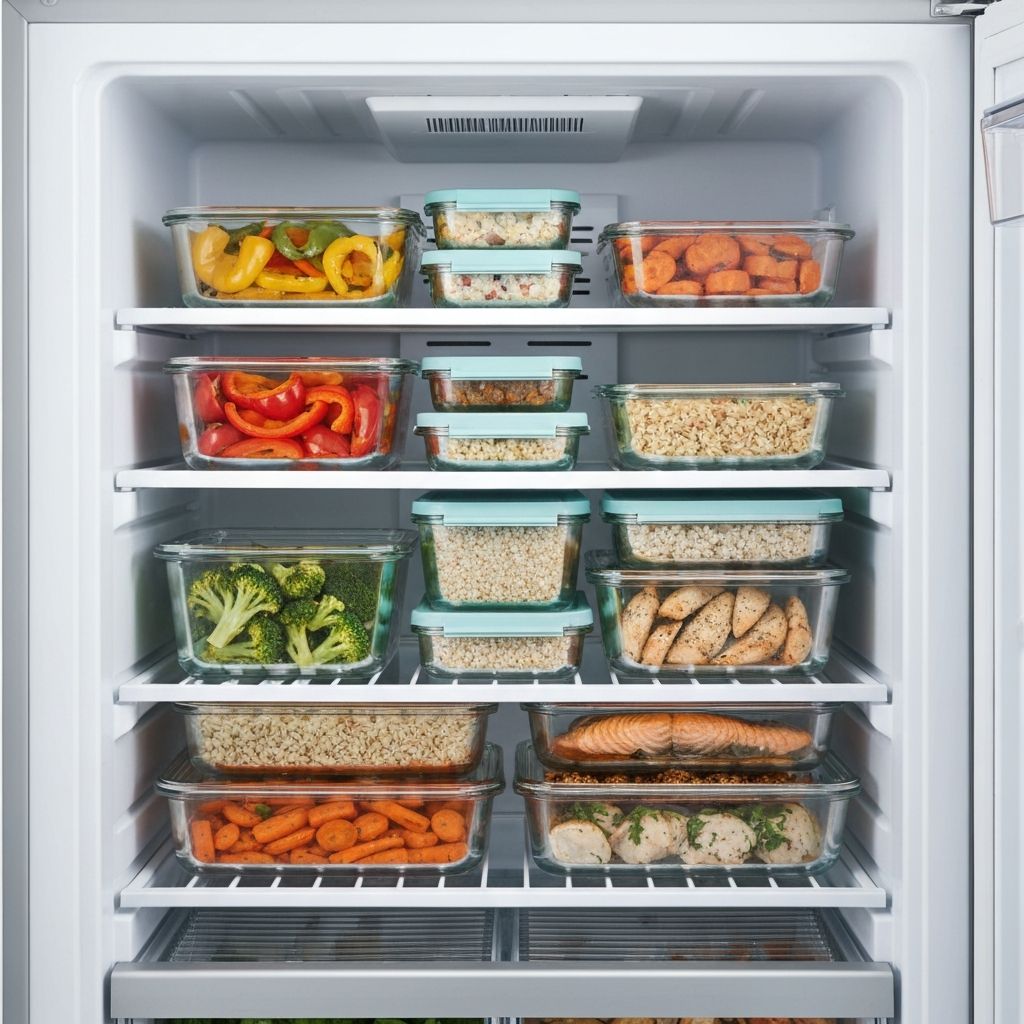
Glass containers with tight-sealing lids provide multiple functional advantages. Glass transparency allows visual identification of contents without opening containers. This supports both food safety awareness and component selection. Lids protect contents during storage and maintain moisture conditions appropriate to specific components.
Consistent container sizes across different component types simplifies storage arrangement and maximises available space. Uniform containers stack efficiently and create visual consistency within storage areas.
Labelling Systems
Clear labelling indicating both component type and preparation date supports food safety awareness and consumption decisions. Labels can be as simple as marker on tape affixed to containers or printed labels. Systematic labelling creates quick visual reference without requiring container opening.
Refrigerator Organisation
Designated shelf zones for similar component types simplify location and selection. Upper shelves might contain prepared proteins and grains. Middle shelves hold roasted vegetables in distinct containers. Lower sections accommodate sauces and fresh components. This organisation creates consistent location patterns supporting quick identification.
Temperature zones within refrigerators vary, with upper shelves typically warmer and lower shelves colder. Understanding these variations supports appropriate storage location selection based on specific component characteristics.
Freezer Organisation
Stackable containers maximise freezer space utilisation. Layering similar components together creates efficient use of vertical space. Organisation systems that remain consistent across multiple freeze-storage cycles support quick location of specific items without extended searching.
Freezing extends component storage duration significantly, typically 1–3 months depending on component type. Labelling with dates supports awareness of storage duration and consumption priority.
Visual Awareness and Decision-Making
Research on food selection indicates associations between visual awareness of available options and consumption decisions. When prepared components remain visible and accessible, selection patterns differ from contexts where options remain hidden or difficult to identify. Organisation that promotes visibility influences what becomes practically accessible at eating occasions.
Maintenance and Rotation
Regular review of stored components supports consumption of older items before expiration and prevents accumulation of forgotten items. Simple rotation systems—placing newer containers behind older ones—encourages consumption of earlier prepared items first.
Spatial Considerations
Available refrigerator and freezer space varies across households. Organisation systems should accommodate actual available space rather than aspirational arrangements. Realistic assessment of available storage guides component quantity decisions and preparation frequency.
Flexibility and Adjustment
Organisation systems should support personal preferences and actual usage patterns rather than imposing external requirements. If specific arrangements consistently prove ineffective, adjustment to alternative systems serves better than adherence to systems not aligned with actual practices.
Important Reminder: Storage organisation approaches vary based on available space, household composition, and individual preferences. This information is educational in nature. Storage systems should be adapted based on actual circumstances and usage patterns.