 Tavrin
Time-Efficient One-Tray Roasting Methods
This article provides educational information on roasting techniques used in meal preparation. It does not constitute cooking instructions or nutritional advice. Food preparation approaches vary based on individual circumstances and equipment.
Sheet Pan Roasting Overview
Sheet pan roasting represents one of the most time-efficient batch preparation techniques. By arranging vegetables, proteins, or other ingredients on a single flat surface and exposing them to dry heat in an oven, multiple components can cook simultaneously. The method requires minimal active attention and produces consistent results across repeated execution.
Basic Technique Elements
Preparation: Vegetables or proteins are cut into relatively uniform sizes to promote even cooking. Coating with oil supports browning and heat transfer. Seasoning at this stage allows flavours to develop throughout cooking duration. Arrangement on the pan affects heat distribution and final texture development.
Temperature Selection: Different ingredients respond optimally to different oven temperatures. Root vegetables typically cook effectively at 200°C, while other vegetables may require 180–220°C depending on desired browning and texture outcome. Understanding temperature effects on specific ingredients develops through experience and observation.
Timing: Cooking duration varies based on ingredient type, size uniformity, oven characteristics, and desired final texture. Vegetables ranging from 20–40 minutes depending on these factors. Proteins require different time ranges and temperature considerations. Checking progress partway through cooking supports consistency.
Multi-Component Roasting
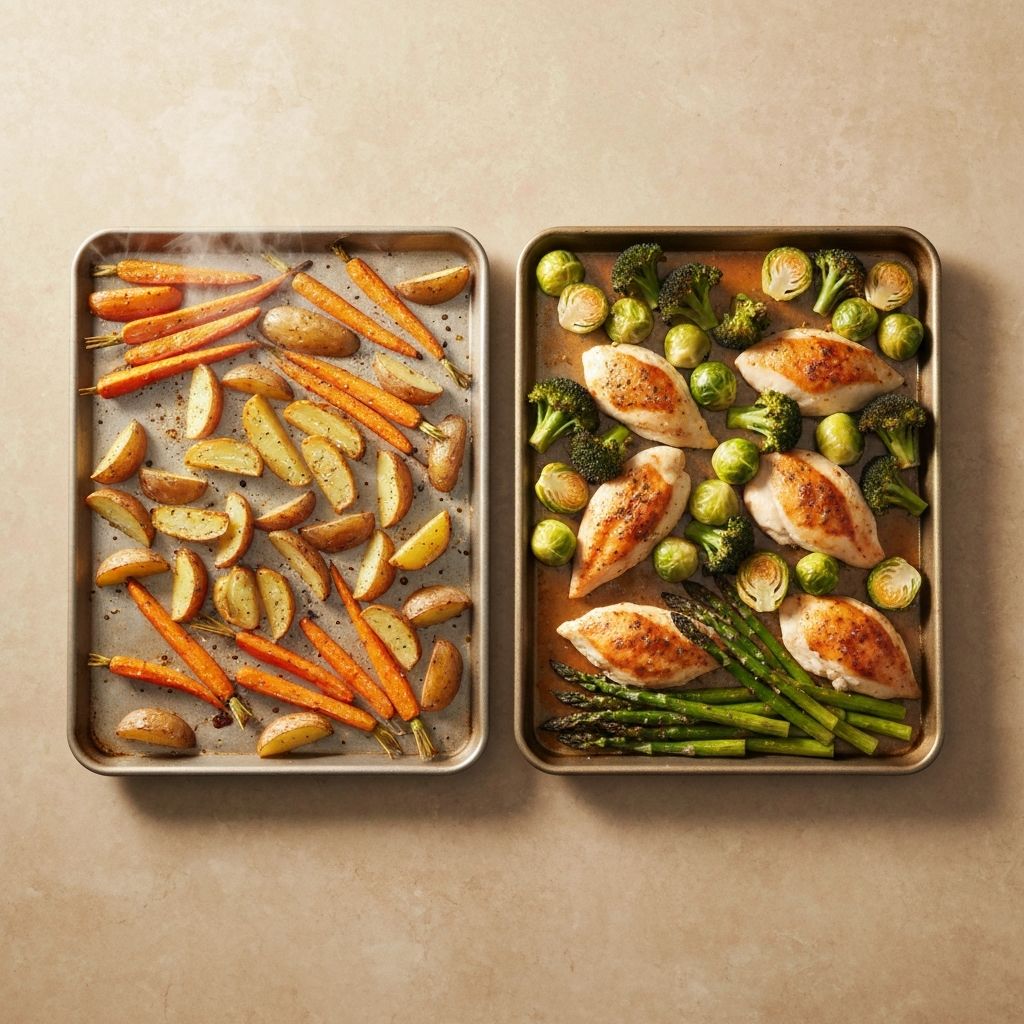
Combining multiple ingredients on a single tray requires consideration of cooking times. Vegetables with longer cooking requirements begin roasting before faster-cooking items are added. Alternatively, separate trays roasting simultaneously reduces overall completion time while requiring more oven space.
Arranging ingredients with space between pieces promotes air circulation and browning. Crowding the pan steams rather than roasts items. Understanding these spatial relationships improves outcomes across repeated batches.
Flavour Development
Dry heat roasting develops complex flavours through browning reactions not achievable through steaming or boiling. The extent of browning influences final flavour profile. Higher temperatures and longer durations produce deeper colours and more concentrated flavours, while moderate temperatures preserve lighter colours and milder flavours.
Protein Roasting Considerations
Chicken, fish, and other proteins roasting effectively on sheet pans when properly seasoned and arranged. Understanding appropriate internal temperatures ensures food safety. Cooking duration varies based on thickness and protein type. Resting protein after cooking allows residual heat to complete cooking without overcooking exterior surfaces.
Storage and Utilisation
Once roasted and cooled to safe handling temperature, components transfer to storage containers. Maintaining separation between different ingredients during storage allows independent utilisation throughout the week. Roasted components remain stable through refrigerated storage for multiple days, supporting flexible consumption patterns.
Equipment Variations
Standard sheet pans work effectively for roasting. Line with baking paper or foil to simplify cleaning and prevent sticking. Different oven models vary in heating characteristics and air circulation patterns. Familiarity with specific oven behaviour develops through repeated use and observation of outcomes across varied preparations.
Seasonal and Ingredient Variations
Different vegetables available seasonally require slight adjustment to timing and temperature. Seasonal selection supports both flavour development and resource efficiency. Experimentation with different ingredient combinations and preparation methods develops confidence and identifies optimal approaches for personal circumstances.
Important Reminder: Roasting techniques vary based on specific ingredients, oven characteristics, personal preferences, and desired outcomes. This information is educational in nature. Cooking approaches should be adjusted based on individual circumstances and equipment.