 Tavrin
Core Principles of Component-Based Batch Preparation
This article provides educational information on meal preparation techniques. It does not constitute nutritional or lifestyle advice, and individual circumstances vary greatly. No outcomes or results should be expected.
Understanding Batch Preparation
Component-based batch preparation represents a distinct approach to food preparation that differs fundamentally from traditional meal planning. Rather than preparing complete finished meals in advance, this method focuses on cooking individual ingredients or simple component groups and storing them separately for combination throughout the week.
The Component Cooking Concept
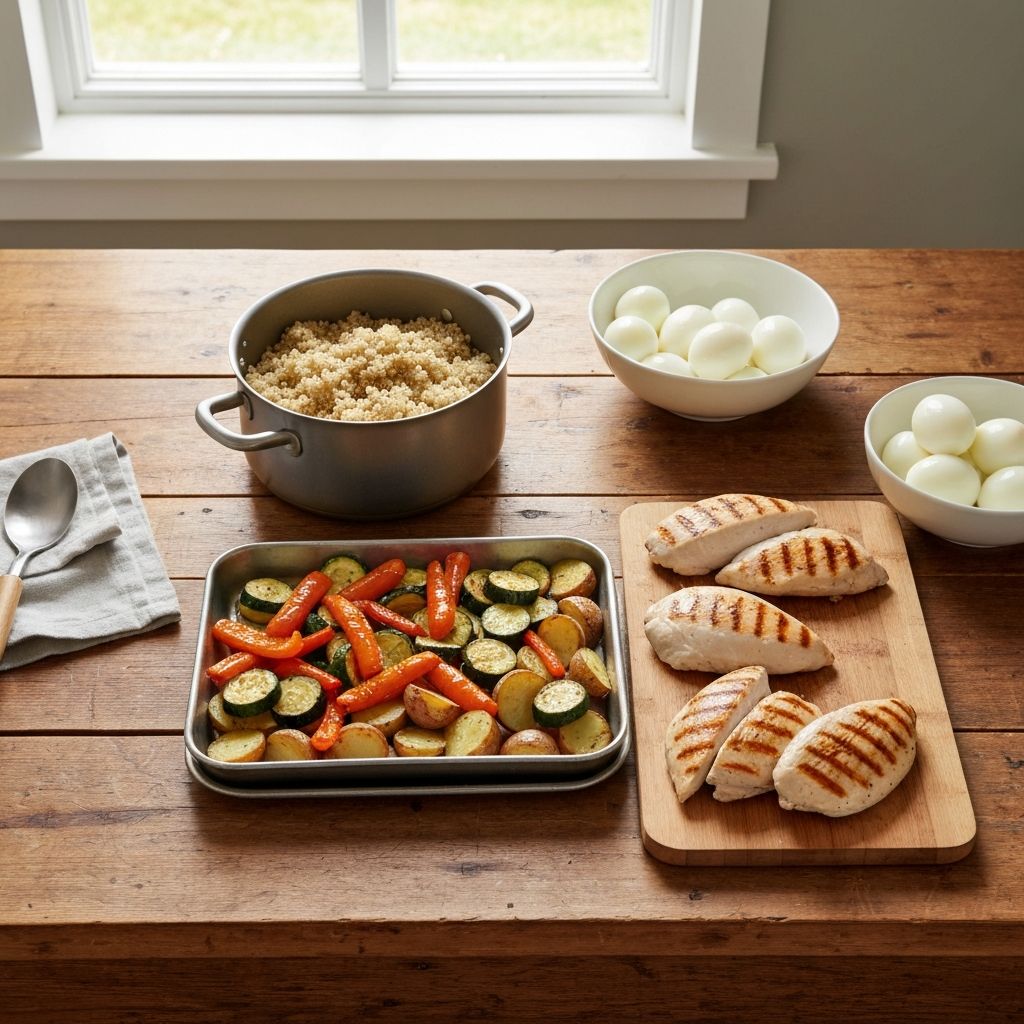
At its foundation, component cooking recognises that most meals consist of identifiable elements: a protein source, vegetables, a carbohydrate base, and often a flavouring element. Instead of assembling these into fixed combinations, batch preparation cooks each element independently, stores them in appropriate containers, and allows selection and combination at the point of consumption.
This approach offers flexibility because components prepared for one meal type can be repurposed in different combinations throughout the week. A roasted vegetable prepared for one context might appear alongside different proteins and grains in subsequent meals.
Key Advantages of Component Preparation
Time Efficiency: Rather than repeating preparation steps daily, similar operations occur in larger batches. Roasting multiple trays of vegetables simultaneously requires less active time than cooking single servings across multiple occasions.
Flexibility: Components prepared without specific final applications in mind can be assembled based on actual need and preference at eating occasions. This accommodates schedule variability and preference changes throughout the week.
Decision Support: By removing the daily decision of what to eat from raw ingredients, batch preparation influences what becomes accessible at each occasion. The availability of prepared components changes the practical options available.
Skill Development: Repeated execution of specific preparation techniques develops competence and efficiency. Individuals learn optimal approaches through iteration and refinement.
Preparation Methodology
Typical batch preparation begins with identifying components to prepare: perhaps roasted root vegetables, cooked grains, prepared proteins, and fresh or preserved vegetables. Each component undergoes appropriate preparation independently. Roasting might occur in multiple oven stages, cooking of grains happens simultaneously, and proteins receive appropriate heat treatment.
Once components reach appropriate cooking completion, they cool to safe storage temperature and transfer into individual containers. Labelling with preparation dates supports food safety awareness. Storage location—refrigerator, freezer, or ambient—depends on specific components and intended usage timeline.
Individual Variability
Batch preparation approaches vary significantly based on personal circumstances. Some individuals prepare all components weekly in a single extended session. Others distribute preparation across multiple shorter sessions. Some prepare larger quantities suited to regular consumption patterns. Others favour smaller batches with more frequent preparation cycles.
Cooking confidence, available equipment, storage space, and work schedule all influence optimal approaches. Equally, food preferences, dietary approaches, and family composition affect component selection. No single methodology suits all individuals.
Relationship to Schedule Flexibility
Advance preparation of components supports flexibility rather than restricting it. Individuals can assemble different combinations based on actual eating occasions rather than predefined sequences. This suits both consistent schedules and irregular patterns. The prepared components remain available for combination in various ways, with final assembly determined at the point of use.
Observational Evidence
Research examining meal preparation frequency and dietary patterns indicates associations between regular preparation and various dietary quality markers. These associations remain observational and do not establish causal relationships. Individual outcomes depend on numerous factors beyond preparation frequency alone, and significant variability exists across individuals practising similar approaches.
Important Reminder: This information is educational in nature. Individual food preparation habits, schedules, and dietary approaches vary greatly. No specific outcomes should be expected from adoption of component-based preparation approaches. Consult appropriate professionals regarding personal food preparation decisions.